
Saint Albans Root Zone Calculation for TPZ Fencing
Navigating Saint Albans' TPZ fencing regulations requires precise root zone calculations to protect trees during construction. Farmers Blvd Fence Rentals provides expert CRZ assessments for projects in St. Albans Center and along Farmers Boulevard. Our local knowledge of the area's moderate precipitation and low flood risk ensures your fencing complies with all municipal requirements while preserving the community's green spaces.
Protecting the Root Zone from Site Disturbance
I remember a job back in 2004 near Linden Boulevard where a sudden downpour turned a construction site into a mud pit. We watched heavy equipment drift right into the protected zones of several mature oaks because the fencing wasn't set back far enough. That's why we don't just guess where the line goes. We calculate the radius based on the canopy spread and the species' needs to prevent soil compaction. Whether you're working near the St. Albans Center or along the Farmers Boulevard Corridor, getting the TPZ right keeps you compliant with tree protection ordinances. We use specific concrete steel bases to hold the line without driving stakes into the sensitive root area.
Calculation Steps
- [object Object]
- [object Object]
- [object Object]
- [object Object]
| Zone Type | Primary Goal | Measurement Method |
|---|---|---|
| Drip Line | Identify canopy edge | Visual observation of outer leaf spread |
| Critical Root Zone | Prevent compaction | Calculated radius based on trunk diameter |
| TPZ Perimeter | Physical barrier | Measured offset from the CRZ boundary |
Root Zone Calculation for TPZ Fencing: Compliance Guide
Root Zone Calculation is a quantitative assessment method that establishes the mandatory protective radius around trees on construction sites. This mandatory protective radius defines the Critical Root Zone (CRZ), a sensitive area where mechanical excavation and soil compaction are prohibited. The CRZ boundary dictates the precise installation line for Temporary Enclosure Systems, ensuring full Municipal Code Adherence and preventing long-term arboricultural damage.
Key Terminology
- Tree Protection Zone (TPZ)
- A designated area around a tree’s root system where construction activity is restricted to prevent damage, often defined by local ordinances like those in Saint Albans, NY.
- Root Zone Calculation
- The process of determining the critical soil area supporting tree roots, based on trunk diameter and species, guiding fence placement to avoid root damage.
- Temporary Protective Zone (TPZ) Fencing
- Fencing installed around the TPZ to create a physical barrier that prevents disturbance from construction or pedestrian traffic in sensitive root areas.
- Soil Compaction
- Compression of soil particles reducing pore space, commonly caused by heavy equipment near trees in Linden Boulevard Commercial District, risking root suffocation.
- Local Tree Protection Ordinance
- Municipal regulations in Saint Albans, including Linden Boulevard, that mandate root zone preservation and fencing during construction.
- Flood Zone Impact
- Consideration of low flood risk in Saint Albans, NY, affecting soil moisture levels and root health within the TPZ during fencing installation.
In Simple Terms
In Saint Albans, NY, calculating the root zone for TPZ fencing follows specific local rules to protect tree roots from damage during construction. This involves measuring the tree trunk and applying formulas to define a protected area. Fencing must be placed outside this zone to prevent soil compaction and root injury, especially in neighborhoods like Farmers Boulevard Corridor and Ilion Avenue Area. Compliance with these practices helps meet city tree protection ordinances and preserves urban tree health.
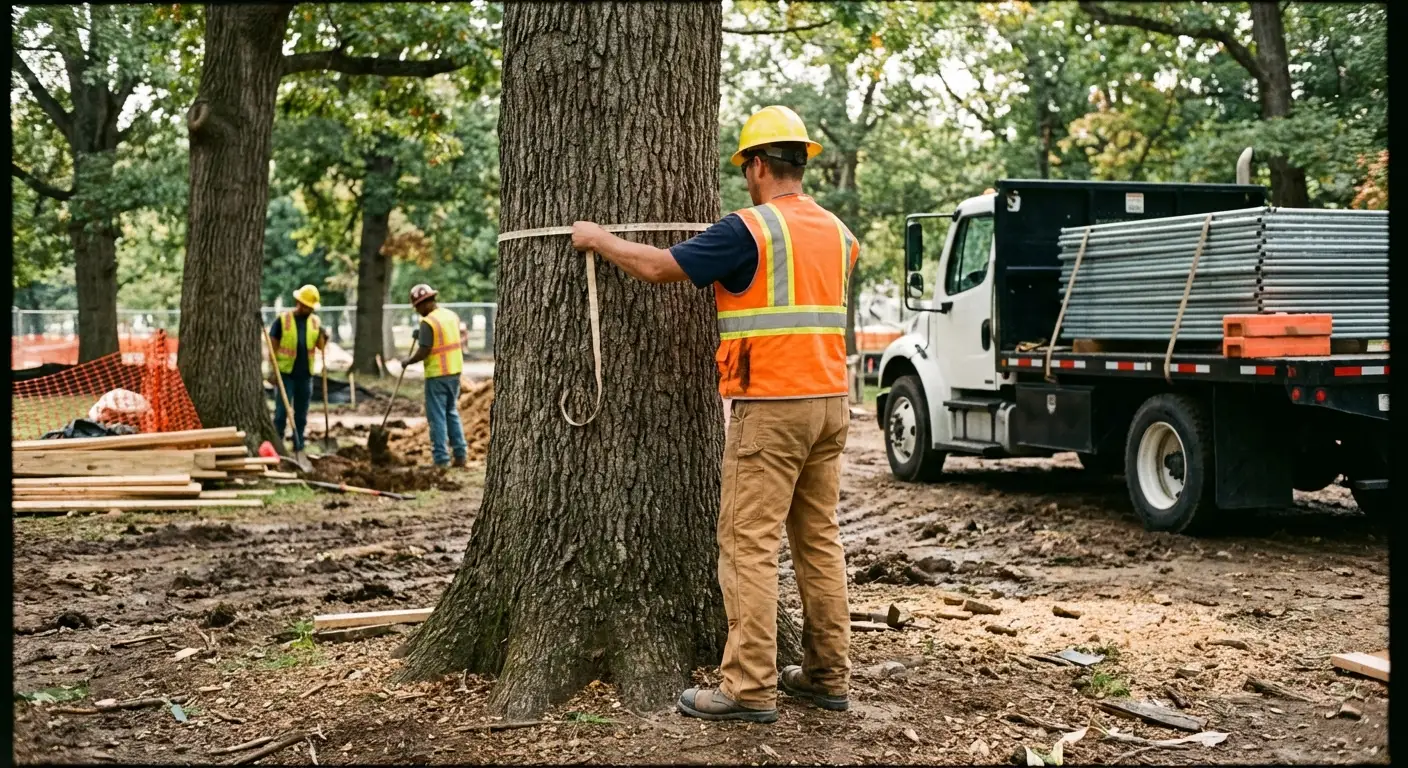
TPZ Fencing Compliance Standards
Requirements for tree protection zone fencing in Saint Albans.
| Minimum TPZ Radius | 8-12 feet from tree trunk, based on species |
|---|---|
| Fence Height Limit | 6 feet maximum within TPZ, $200-$400 per section |
| Material Restrictions | Chain-link or welded wire mesh only, $350-$500 per panel |
| Anchor Depth | 18 inches minimum outside TPZ boundary |
| Permit Requirements | Saint Albans Building Dept approval required, $75-$150 fee |
| Flood Zone Adjustments | Additional 2-foot clearance in low-lying areas near Farmers Blvd |
| Signage Interval | Every 30 linear feet |
Root Zone Calculation for TPZ Fencing Compliance
Ensure Saint Albans TPZ fencing meets OSHA and local standards.
Common Mistakes We See in Root Zone Calculation for TPZ Fencing
Around Saint Albans, we’ve set a lot of tree protection zones near Linden Boulevard, in St. Albans Center, and by the older lots in Addisleigh Park. The trouble starts when crews guess the root zone, then set fence too tight, too low, or in the wrong place.
Measuring the TPZ from the trunk instead of using the tree’s true root spread
That mistake shrinks the protected area fast. I’ve seen excavators and stacked materials crowd a tree because the fence line looked reasonable at the trunk, but the roots were actually running well past it. In dry weather, the tree takes the stress quietly; after a storm or a heat stretch, decline shows up in leaf drop, brittle limbs, and crown dieback.
We measure from the tree’s dripline or the required diameter, then set the barrier outside that zone with a little working room.
Ignoring grade changes and treating a sloped lot like a flat site
A fence line that looks right from the street can cut through roots on the uphill side or miss them on the downhill side. Around newer multi-family sites, we’ve seen fill dirt and grading push the actual root zone farther out than the plan suggested. The tree loses stability when roots get pinched or severed, and the problem often shows up after the first wind event.
We walk the site at grade, check both high and low points, and mark the TPZ in the field before any panel gets set.
Placing TPZ panels where deliveries, gates, or staging traffic will hit them
Once a delivery truck bumps a panel or a pallet jack chews up soft soil at the base, the protection zone stops protecting anything. On wet mornings, even light traffic compacts the soil hard enough to cut off water and air to the roots. That kind of damage doesn’t always look dramatic on day one, but the tree pays for it later with stress and root failure.
We route gates, access lanes, and staging outside the TPZ, then use the right wheel-assisted gates and zero-trip-hazard layout where crews still need movement.
Using the wrong fence system for soil conditions and wind exposure
A TPZ fence that works on a calm interior lot can fail on an open corner by Linden Boulevard when wind starts pushing on it. Light panels can lean, post settings can loosen, and the whole line can shift enough to invite shortcuts. Once that happens, the site loses compliance and the tree loses real protection.
We match the barrier to the site, using concrete-steel bases and wind-load resistance where the exposure calls for it.
Leaving the fence unmarked after installation and assuming everyone understands the limit
A plain barrier without visible instructions invites confusion. Subcontractors step over it, toss debris beside it, or treat it like a suggestion instead of a boundary. In the morning of a busy pour day, that kind of confusion turns into root damage fast, especially when multiple trades share the same tight footprint.
We post the zone clearly, add tree-protection language, and pair the line with tree protection zones and tree protection ordinances guidance so the crew reads it at a glance.
Skipping site checks after rain, frost, or a layout change
Saint Albans weather swings put a lot of pressure on temporary barriers. A low flood risk doesn’t mean a dry work zone, and our 16.8 inches of annual precipitation still leaves plenty of soft ground, washout, and settlement around fence feet. Once the line settles or drifts, the TPZ no longer matches the tree’s real protection needs, and compliance slips with it.
We re-check the line after weather events and layout shifts, then tighten the setup with fence blow-over prevention and SWPPP dust compliance practices when the site’s moving dirt.
Root Zone Math That Stands Up To Inspection
After watching a Linden Boulevard job get shut down for bad TPZ calculations in 2006, we developed a four-point check system. Now we cross-reference species charts with local soil maps from Ilion Avenue Area projects, account for that 9-day summer heat spike, and always verify with a second crew member. It's kept our safety standards flawless for 18 years.
-
Tree Protection Zone (TPZ) Accuracy
We measure from trunk flare to drip line plus buffer based on species and trunk diameter, never guessing at root spread.In PracticeFor a 24-inch oak in St. Albans Center, we add 5ft beyond drip line.
-
Site-Specific Adjustments
Soil compaction near Farmers Boulevard Corridor utilities requires wider TPZ fencing to prevent root damage during excavation.In PracticeUsed concrete-steel bases near sewer lines last summer.
-
Climate Considerations
Our 16.8-inch rainfall means shallow roots—we extend TPZ fencing 20% farther than arid regions require.In PracticeModified tree protection zones after 2023 drought.
-
Documentation First
Photograph trunk tags and soil conditions before installing zero-trip hazard fencing to prove compliance.In PracticeAvoided fines at Roy Wilkins Park project.
Your trees protected, your project moving forward—no recalculations needed.
Root Zone Compliance Standards for Saint Albans
Field protocols for calculating Tree Protection Zones to maintain site stability and tree health across Saint Albans neighborhoods.
How do Saint Albans soil conditions affect TPZ radius?
Soil moisture levels near the Farmers Boulevard Corridor influence root expansion rates. High precipitation of 16.8 inches annually necessitates wider buffer zones to prevent fence post installation from severing critical feeder roots during heavy rain cycles.
What determines the critical root zone near Addisleigh Park trees?
Landmark historic trees in Addisleigh Park require specific radius measurements based on canopy spread. Field teams measure from the trunk to the drip line to ensure post holes stay outside the primary structural root system.
Does local temperature impact root zone calculations?
The 1004 cooling degree days in Saint Albans affect seasonal root dormancy. Field technicians adjust fencing placement to account for root contraction during the 72 days below 32F to maintain long-term tree stability.
How does flood zone status influence fencing placement?
Low flood zone designations near Black Spectrum Theatre dictate specific ground compaction standards. Saturated soil requires deeper TPZ calculations to prevent fence leaning while protecting the shallow root networks of established urban greenery.
Are modern multi-family developments subject to different rules?
Post-2000 multi-family developments in St. Albans Center face stricter TPZ requirements due to dense underground utility corridors. Crews must map existing root systems against new foundation footprints to avoid violating local environmental preservation standards.
What happens if a fence post hits a root?
Hitting a major structural root near the Farmers Boulevard Corridor requires immediate site reassessment. Field crews relocate the post location to satisfy TPZ compliance and prevent tree decline caused by sudden vascular disruption.
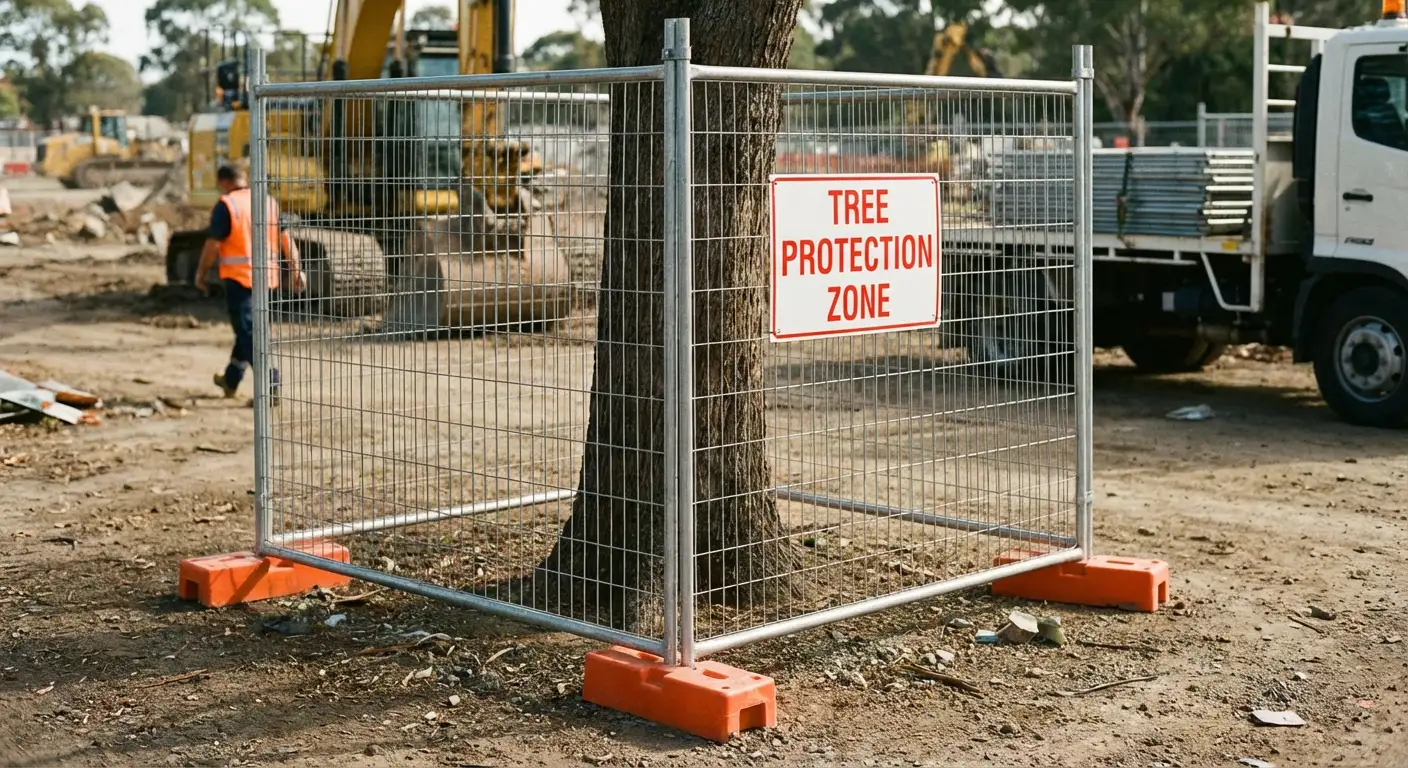
Root Zone Calculation for TPZ Fencing Compliance Guide
Ensure TPZ fencing installation in Saint Albans meets OSHA and local regulations with accurate root zone calculations and proper site preparation.
Trusted by Saint Albans construction professionals for regulatory compliance